IN BRIEFLY Modern sales teams lose up to 7 hours every week copying LinkedIn conversations into their CRM. That's a full workday gone, not to selling, but to data entry. The problem isn't your work ethic. It's your stack.
Why Linkedin-first sales teams are drowning in admin, and what a modern prospecting CRM should actually do.
The daily ritual nobody talks about
If you prospect on LinkedIn every day, you probably know this loop by heart:
Send a message
Switch tabs
Open your CRM
Copy-paste the conversation
Log the activity manually
Then repeat. All day.
It sounds small. But it slowly kills your productivity. After a few hours, you're not selling anymore, you're doing admin work. And if you're honest with yourself, half your conversations never even make it into the CRM.
This isn't a discipline problem. It's a design problem.
Why Linkedin and your CRM don't speak the same language
Modern outbound teams rely heavily on Linkedin, it's where conversations start, deals warm up, relationships build, and most B2B prospects actually reply.
But your CRM? It still acts like it's 2016.
Most tools like Pipedrive, Attio, or Airtable were built around emails, forms, and pipelines, not real-time Linkedin conversations. So sales teams end up duct-taping their workflow together:
Chrome extensions
Spreadsheets
Copy-paste notes
Random automations
5 different tools that barely talk to each other
Your "CRM stack" quietly becomes: CRM + Linkedin + Email tool + Enrichment tool + Zapier + hope.
It works. But it's painful.
The real cost - let's do the math
This isn't just annoying. It's expensive.
If you spend 40 minutes per day sending messages, that's 6 hours per week. Wasted.
Now multiply that by your entire team. And that's just the logging, it doesn't count missed follow-ups, forgotten replies, outdated data, or broken personalization.
Sales becomes data entry. Which is exactly what a CRM was supposed to prevent.
The tab chaos problem
Let's be honest about what most prospecting setups look like today. You probably have LinkedIn open, your CRM open, an email tool, an enrichment tool, maybe a spreadsheet, maybe a workflow tool. That's 5 to 6 tabs minimum. All day.
You're not selling. You're juggling software.
Every context switch costs energy. Every manual step adds friction. Friction kills consistency. And consistency is everything in outbound, it's what fills your pipeline.
The classic mistakes teams keep making
Stacking more tools to solve a tool problem. Adding a 6th or 7th integration doesn't fix the underlying disconnect, it adds more surface area for things to break.
Relying on discipline instead of systems. "We just need to be more consistent about logging" never works at scale. If the process is painful, it won't happen.
Building around the CRM instead of around the rep. The CRM should adapt to how reps work, not the other way around.
What a modern prospecting CRM should actually do
Instead of forcing you to update your CRM, your CRM should work where you already are. A modern prospecting system should:
Automatically:
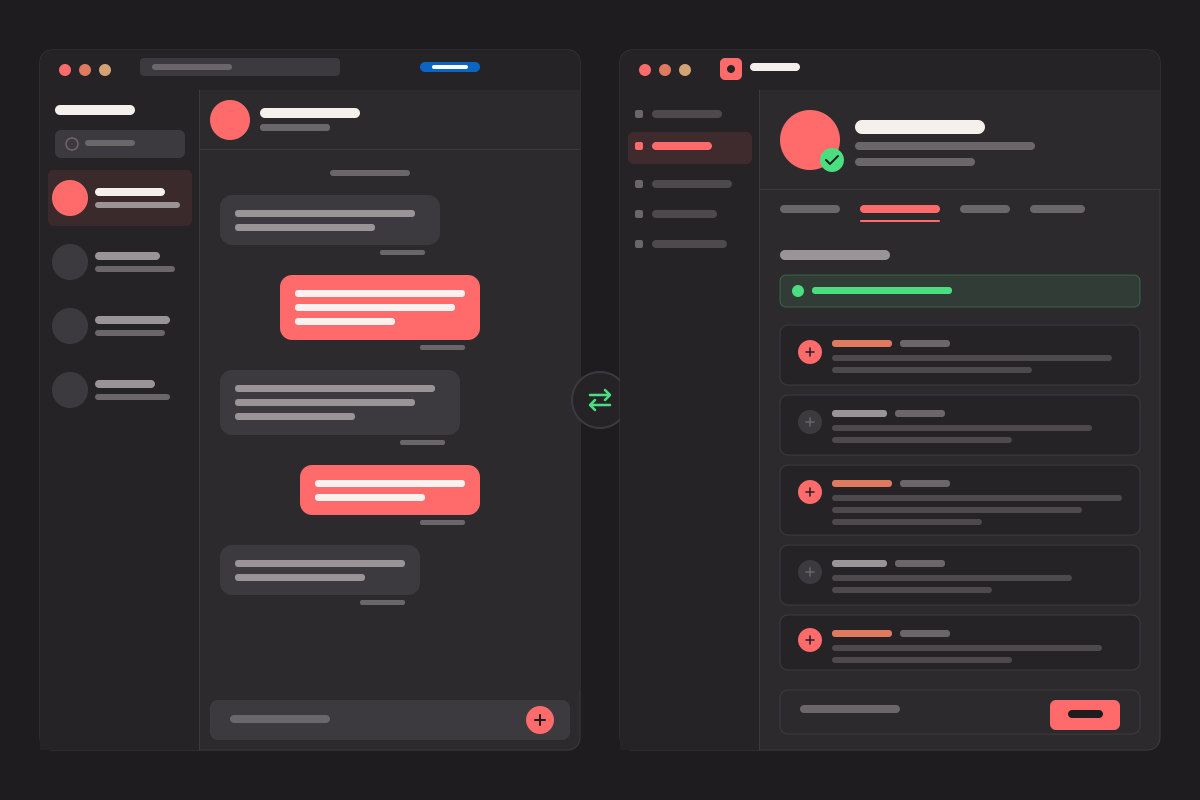
Sync LinkedIn conversations
Log messages and replies
Create contacts
Track every touchpoint
Natively :
Run LinkedIn + email sequences
Handle enrichment
Manage multiple inboxes
Centralize everything
The best CRM is the one you barely notice. It just works.
How we discovered this the hard way
This problem didn't come from a brainstorm. It came from frustration.
After 6+ years using different CRMs, we kept running into the same issues: missing integrations, unreliable APIs, too many workarounds, constant manual effort. We tried switching tools. Then stacking more tools. Nothing felt right.
At some point, we realized: if you need 5 tools and 10 automations just to prospect, the stack is broken.
So instead of patching it again, we started building the CRM we actually wanted to use, one that lives inside LinkedIn, syncs conversations automatically, runs multi-channel outbound, and removes all the boring admin work. Because salespeople should sell. Not maintain software.
The future of prospecting tools
CRMs shouldn't be databases anymore. They should be execution tools.
❌ Old way"Log what you did"
✅ New way"Do the work here"
The winners in the next few years won't be the most complex platforms. They'll be the ones that feel invisible. Fast. Integrated. Zero friction.
Ready to stop doing admin and start selling?
If you've ever thought "I spend more time updating my CRM than talking to prospects", you're not alone. And you're not the problem. Your tools are.
We're building a new type of CRM specifically for LinkedIn-first prospecting teams, one that removes manual logging completely and lets you run your entire outbound workflow from a single place. If you want early access, join the beta. No forms. No complexity. Just better prospecting.
IN SUMMARY
Your CRM should save you time. If it creates work instead, it's not a CRM, it's just another task. The teams that will win at outbound in 2026 are the ones who build around execution, not documentation.